Budgeting for a dog, without the guilt trip
By the PupCost editorial team · Last verified November 18, 2026
A simple monthly habit, a small reserve, and a yearly check-in. That is the whole system, and here is exactly how to set it up, with numbers.
The short answer: the whole system in one paragraph
Take the monthly number from the calculator for your breed, size, and state, somewhere between about $195 and $365 for most family dogs. Pay the steady lines from your normal monthly budget. Add a second, smaller transfer, $25 to $50 a month, into a separate reserve pot for the lumpy and the surprising. Review the whole thing once a year, and once more whenever your dog changes life stage. That is the entire system. No spreadsheets, no guilt, no fourteen-category budget app required, because a system you actually keep beats a perfect one you abandon by March.
The two-pot method, with a worked example
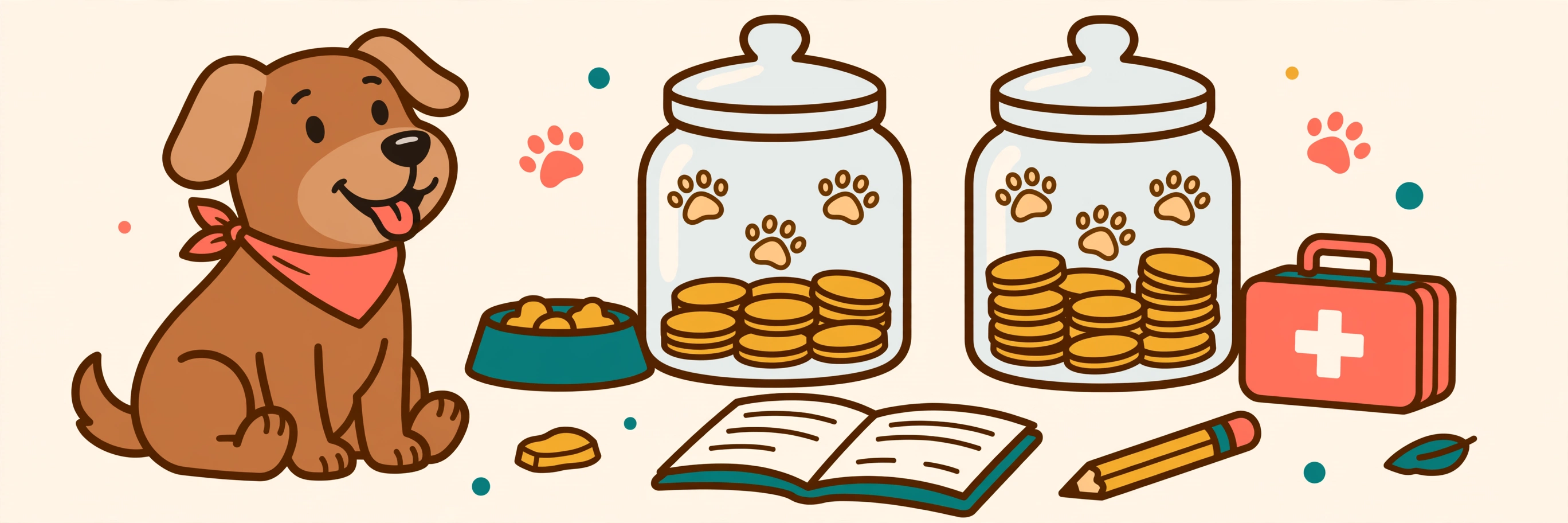
Pot one is the steady month. For a medium dog at national prices it holds about $241: $65 food, $60 routine vet care, $40 grooming, $30 supplies, and $46 average insurance. These lines arrive every month whether you plan or not, so they belong in the ordinary household budget, next to groceries and utilities. Pot two is the reserve, and it exists because dog costs are honest but lumpy: boarding for a family trip at $40 to $70 a night, a chewed sofa cushion, a torn nail that needs a vet, the annual license. At $40 a month, pot two holds about $480 by the end of year one and quietly absorbs almost every surprise a normal dog year contains.
Keep the pots in genuinely separate places, a second savings account or a labelled sub-account, because a reserve that lives in the checking balance gets spent by optimism. The transfer happens on payday, automatically if your bank allows it. Willpower is a terrible budgeting tool; a standing transfer is a wonderful one.
What affects a dog budget over time
Life stage is the big mover. The first year carries the one-time stack of about $1,150 to $1,800 on top of the monthly lines. The middle adult years are the calm water. Senior years, starting around age seven for giant breeds and ten or eleven for small ones, lift the vet line with twice-yearly exams, blood work, dental procedures, and joint support. A budget built in the puppy year and never revisited will be wrong in both directions across a lifetime: too high in the calm years, too low at the two ends.
Household changes move it too: a move to a pricier state raises vet and insurance lines by 10 to 20 percent, a second dog adds roughly 70 to 85 percent of the first dog's cost rather than a clean double, and a new work schedule can add a dog walker at $15 to $25 a walk. The budget is a living number. The yearly review below is how it stays alive.
Practical steps: set it up in one afternoon
- Run the calculator for your dog, or the dog you are dreaming of, and write down three numbers: first year, monthly, and lifetime.
- Open the reserve pot the same day, a separate savings space with your dog's name on it, and set a standing transfer of $25 to $50 for the day after payday.
- Convert the annual bills into monthly ones: divide the yearly vet visit, license, and any annual insurance premium by twelve, and fold the result into pot one so no single month ambushes you.
- For the first three months, keep a scruffy little log, notes app or envelope, of what the dog actually cost. Compare it with the plan at month three and adjust the two or three lines that drifted; every family's real numbers differ from any model, and yours are the ones that count.
- Put the yearly review in the calendar on a date you will keep, the dog's birthday is a good one, and pair it with something pleasant. Budgets reviewed with cake survive; budgets reviewed with dread do not.
Common budgeting mistakes
Mistake one: budgeting only the food. Food is roughly a quarter to a third of a dog's true month, so a food-only budget guarantees monthly surprises. Mistake two: no reserve, because the dog is healthy and young. The reserve is not for the expected; it is for the Tuesday night ear infection and the swallowed corn cob, and it is cheapest to build before it is needed. Mistake three: lifestyle creep in the cute aisle: treats, chews, toys, and holiday outfits are real money at $15 here and $22 there, and they belong in the supplies line where you can see them, not in a fog of small card charges.
Mistake four is the guilt trip itself: treating every overage as a failure instead of information. A month that runs $60 over because the groomer and the vet landed together is the system working, as long as the reserve absorbed it. The only true failure mode is not looking, and you are reading this guide, so you are already looking.
The bottom line
A monthly habit, a small reserve, and a yearly check-in: that is the whole system, and it works for a $195 Dachshund month and a $365 giant month alike. Budgeting for a dog is not about squeezing the joy out of the spending; it is about making sure the spending never squeezes the joy out of the dog. Ten minutes to set up, ten minutes a year to review, and the money quietly takes care of itself while you take care of the dog.
Sources: AKC, ASPCA cost categories, Rover, Synchrony Bank, APPA, NAPHIA. Last verified November 18, 2026.